 TR
 EN
 KA
 RU
 AR
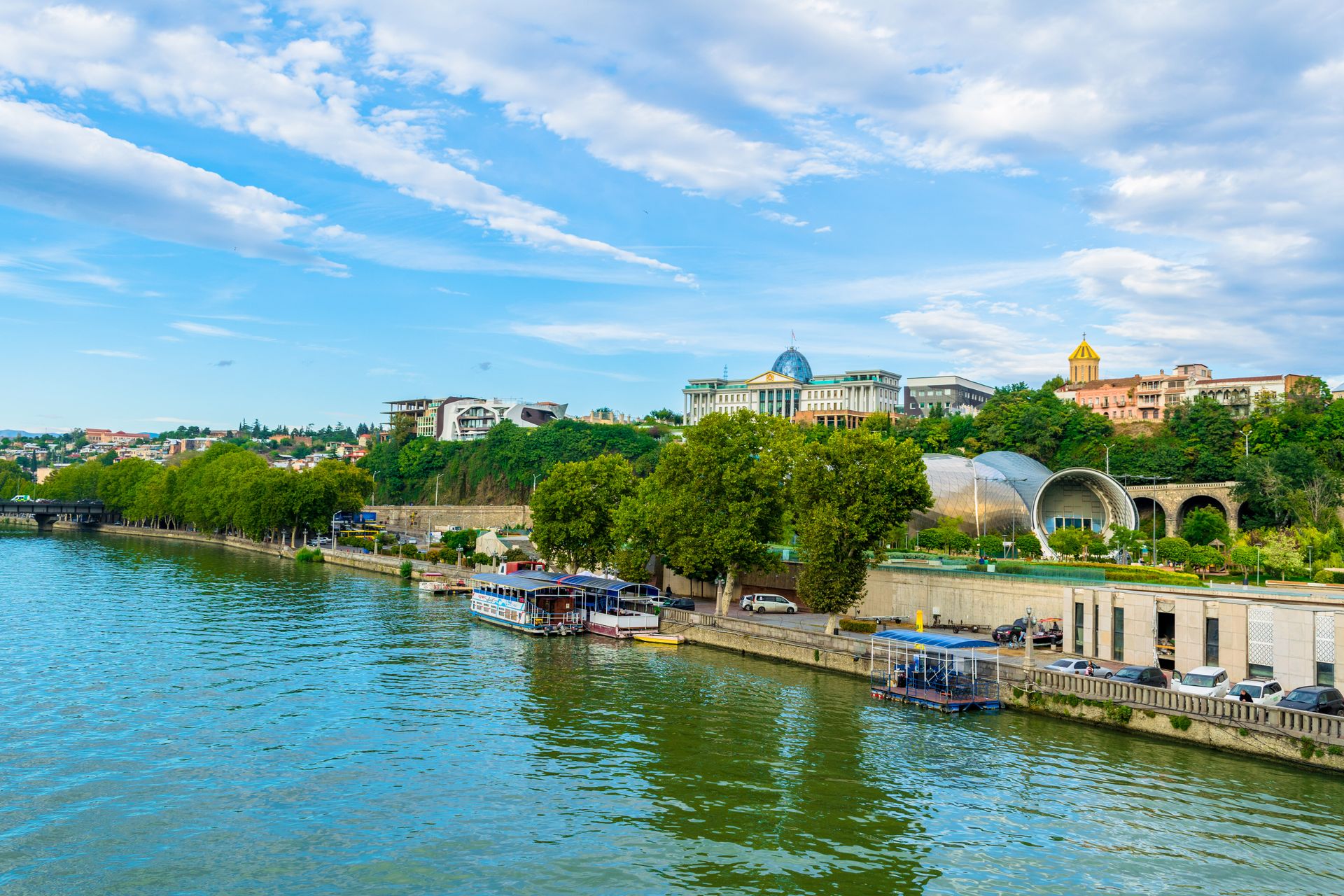
Laws and Rules in Georgia — What You Need to Know
Traffic rules, drug laws, customs, visa & residency, cultural etiquette — the complete legal guide for tourists and expats in Georgia (Caucasus).
Essential Laws and Rules in Georgia
Georgia is one of the Caucasus region's fastest-growing tourist destinations, celebrated for its warm hospitality and famously open visa policy. However, certain laws are exceptionally strict, and ignorance is never an accepted legal defence. This guide covers the key legal information every tourist and expat should know before visiting or settling in Georgia.
Traffic Rules
Traffic in Georgia flows on the right-hand side of the road, identical to most of Europe. Road signs follow European conventions, making adaptation straightforward for most foreign drivers. There are no toll roads anywhere in the country.
Speed limits:
- Urban areas: 60 km/h
- Rural roads: 90 km/h
- Expressways: 110 km/h
Speed cameras are heavily deployed — roughly 3,000 across the country, including average-speed zones. Fines start at 50 GEL for minor violations and rise to 300 GEL for exceeding the limit by more than 40 km/h. Paying within 10 days earns a 20% discount; fines left unpaid beyond 30 days continue to double.
Holding a mobile phone while driving is prohibited; hands-free devices only (30 GEL penalty). Front-seat seatbelts are compulsory. Children under 7 must be in an approved child seat; children under 12 must travel in the rear seats.
Alcohol and Driving — Near-Zero Tolerance
Georgia's drink-driving limit is among the strictest in Europe: blood alcohol content must not exceed 0.03‰ (0.03 per mille). In practical terms, a single glass of wine can push most adults over the legal threshold.
Georgia is world-famous for its wine and chacha (grape brandy) culture, which makes the morning-after risk very real — alcohol can remain detectable in the body for many hours. First-time penalties start at 700 GEL; repeat offences can reach 2,500 GEL plus a six-month licence suspension. Police officers carry body cameras, making bribery not just futile but a serious criminal offence.
If stopped by police, do not exit the vehicle unless explicitly instructed — doing so unprompted can be interpreted as an aggressive act.
Drug Laws — Extremely Severe Penalties
Georgia's drug legislation ranks among the harshest in Europe. Amendments enacted in June 2025 tightened penalties further. These laws apply equally to tourists and all foreign nationals.
- Trace or small amounts of certain substances (e.g. amphetamine, methamphetamine, desomorphine) — mandatory minimum 5-year prison sentence. For many substances there is no minimum quantity threshold: even residue inside a syringe qualifies as possession.
- More than 1 gram of certain substances — penalties up to and including life imprisonment.
- Cannabis (a few grams): 7–14 years in prison. For context, the maximum sentence for rape under Georgian law is 6 years.
- Passing drugs to another person — classified as criminal distribution even if no money is exchanged.
- Drug trafficking (above threshold): 12–20 years, or life imprisonment.
- Refusing a drug test: 500–2,000 GEL fine or up to 60 days administrative detention.
Since 2025, police routinely conduct drug tests during traffic stops. Some substances remain detectable in the body for up to a month. Always carry prescription medication in its original labelled packaging together with the written prescription.
Public Drinking
Drinking alcohol in public spaces — parks, promenades, outdoor areas — is generally permitted in Georgia and is a normal part of local culture. Individual municipalities may have their own restrictions. The legal minimum age for purchasing or consuming alcohol is 18.
Photography Restrictions
Photography is broadly permitted in Georgia, but the following locations are strictly off-limits:
- Military bases, barracks, and installations
- Border zones and checkpoints
- Airports and strategic infrastructure
Some museums prohibit photography entirely; others allow it without flash — always check at the entrance. Active churches and monasteries require permission before photography, and photographing clergy or worshippers is generally inappropriate. Drones weighing over 250 grams must be registered with the Civil Aviation Agency of Georgia.
Customs Rules
The following customs regulations apply to all travellers entering or leaving Georgia:
- Cash declaration: Any amount equal to or exceeding 30,000 GEL (approx. USD 10,000) must be declared at customs. If you wish to export more cash than you declared on arrival, you must prove the funds were legally acquired.
- Alcohol: Up to 3 litres of alcoholic beverages duty-free (persons aged 18+).
- Tobacco: 200 cigarettes, 50 cigars, or 250 g of tobacco duty-free.
- Cultural heritage: Exporting antiques, historical artefacts, or works of art requires a permit from the Ministry of Culture. Smuggling cultural property carries serious criminal penalties.
- Medications: Only personal-quantity prescription medicines in their original packaging (with prescription) may be imported without prior authorisation from the Georgian Ministry of Health.
- Commercial goods: Non-commercial goods exceeding 20 kg of any single type are subject to a 1 GEL per kilogram levy.
Traffic Rules
Right-hand traffic. 60 city / 90 rural / 110 expressway km/h. ~3,000 speed cameras active nationwide.
Alcohol Limit: 0.03‰
Near-zero tolerance. First offence from 700 GEL + up to 6-month licence suspension.
Drug Laws — Harsh
Trace amounts = 5-year minimum prison. Cannabis = 7–14 years. Penalties toughened further in 2025.
Photography Rules
Military sites, border zones and airports strictly off-limits. Always ask permission in churches.
Cash Declaration
30,000 GEL (≈ USD 10,000) or more must be declared at customs. No ban — just declare.
Emergency Numbers
112: Universal Emergency | 122: Police | 113: Ambulance | 111: Fire. All free of charge.
Visa and Residency Rules
365-Day Visa-Free Stay for Turkish Citizens
Turkish passport holders may enter and remain in Georgia for up to 365 days without a visa — one of the world's most generous visa-free arrangements. Entry is permitted with a valid Turkish passport or a biometric national identity card. No pre-registration, application, or fee is required at the border.
Consequences of overstaying:
- Overstay of up to 90 days: 180 GEL fine
- Overstay of more than 90 days: 360 GEL fine
Fines are paid at the border on departure or re-entry. Same-day re-entry is generally possible after settling the fine; however, serious or repeated violations may result in an entry ban.
Residency Permit Types
Foreign nationals who wish to remain in Georgia beyond 365 days have several legal pathways:
- Property-based temporary residence: Ownership of real estate valued at USD 100,000 or more qualifies for a one-year temporary residence permit (renewable).
- Business-based temporary residence: Establishing or partnering in a Georgian LLC qualifies for a residence permit — typically 6–12 months initially, extendable up to 11 years.
- Investment residence permit: A minimum investment of USD 100,000 grants a 5-year permit; USD 300,000 or more grants an indefinite investment residence permit.
- Family reunification: Spouses and children of existing residence-permit holders are eligible to apply.
Property Ownership Rights for Foreigners
Foreign nationals may freely purchase any real estate in Georgia except agricultural land. Property rights are protected under the Georgian Constitution. Title registration is straightforward and transparent, typically completed within a few working days at a Public Service Hall (PSH). This makes Georgia one of the most foreigner-friendly real estate markets in the region.
Transport and Driving — Additional Details
International Driving Licence
Any national driver's licence printed in Latin or Cyrillic script is valid in Georgia for one year from the date of arrival. Turkish licences are directly recognised. When driving a rental vehicle, always carry your licence, passport, rental agreement, and insurance documents.
Foreign-Registered Vehicles
Foreign-registered vehicles may be driven in Georgia for approximately 3 months without additional formalities. No specific restrictions apply to Turkish-registered vehicles. Third-party vehicle insurance is mandatory; short-term policies can be purchased at border crossings.
Public Transport
Tbilisi's metro, bus, and minibus network operates daily from 06:00 to 24:00. A flat fare of 1 GEL per ride applies across all services; a single MetroMoney card or contactless bank card works on the entire network. Transfers made within 90 minutes of the first tap are free. Travelling without a valid ticket incurs a 20 GEL fine from inspectors. Bolt, Yandex, and Maxim apps offer the most reliable ride-hailing services.
Health and Safety
Emergency Numbers
- 112 — Universal emergency number (police, fire, ambulance). Works without a SIM card. Available 24/7.
- 122 — Direct police line
- 113 — Ambulance / medical emergency
- 111 — Fire services
All numbers are free of charge and reachable from any mobile or landline within Georgia.
Health Insurance
From 1 January 2026, Georgia requires all tourists to hold a valid health insurance policy as a condition of entry. The policy must provide a minimum coverage of 30,000 GEL, be valid for the entire duration of the stay, and be issued in Georgian or English. Failure to present valid insurance may result in refusal of entry. Comprehensive travel health insurance is strongly recommended in any case, as private clinic costs can be substantial.
COVID-19 and Vaccination
All COVID-19 era entry restrictions have been fully lifted. No vaccination certificates, PCR tests, or health declarations are required to enter Georgia.
Cultural Rules and Customs
Georgia has one of the world's oldest and most distinctive cultures. Understanding and respecting local customs will not only enrich your experience but will earn you genuine warmth from the Georgian people.
Church and Religious Site Dress Code
The Georgian Orthodox Church holds a central place in national life. The following rules apply at all churches and monasteries:
- Women must cover their shoulders and knees; long skirts or dresses are preferred.
- Women are expected to cover their heads with a scarf; headscarves and wraps are usually available to borrow at church entrances.
- Men must wear long trousers and remove any hat or cap upon entering.
- Respectful silence is expected; mobile phones should be switched to silent.
- Always ask permission before photographing clergy or worshippers.
Visitors who do not comply with the dress code may be refused entry.
The Supra — Georgian Traditional Feast
The supra is the centrepiece of Georgian social life: a long communal feast featuring abundant food, wine, and elaborate toasts led by the tamada (toastmaster).
- If invited to a supra, accept — declining can cause genuine offence.
- Always wait for the tamada to raise the first toast before drinking.
- Maintain eye contact during toasts and say "Gaumarjos!" (roughly "to victory / cheers").
- Wine may be served in a "kantsi" (animal horn); tradition expects you to drain it.
- Never toast with beer — in Georgian tradition, beer is reserved for toasting enemies.
- If you do not drink alcohol, explain a medical or religious reason — this is fully respected.
- Try to taste every dish offered; refusing food is considered impolite.
- Do not suggest splitting the bill — your host will expect to pay.
Tipping Etiquette
Tipping is not obligatory in Georgia but is increasingly expected in tourist-facing restaurants and cafés — typically around 10%. Some establishments automatically add a service charge to the bill; check before leaving an additional tip. Tipping tour guides, hotel staff, and taxi drivers is appreciated but not required.
General Social Etiquette
- Georgians are exceptionally hospitable — foreigners are treated as guests of the entire country, which is a matter of great honour.
- Respect for elders is paramount; older people are greeted and introduced first.
- Remove your shoes when entering someone's home.
- Bring a small gift — wine, flowers, or sweets — when visiting a Georgian home.
- Avoid discussing Russia, Abkhazia, and South Ossetia; these are highly sensitive topics that can provoke strong reactions.
- Refrain from comparing Georgia unfavourably to other countries; approach the culture with genuine curiosity and openness.
Bargaining Culture
Bargaining is not standard practice in Georgia's restaurants, hotels, or shops, where prices are generally fixed. In open-air markets, antique shops, and craft stalls, polite negotiation on clearly inflated prices is sometimes acceptable, but should always remain friendly and respectful.