 TR
 EN
 KA
 RU
 AR
Kutaisi Travel Guide 2025 — Georgia's Ancient Capital
Kutaisi UNESCO sites, Gelati Monastery, Prometheus Cave — complete travel guide for Georgia's ancient capital.
Kutaisi — Georgia's Ancient Capital
With approximately 3,000 years of history, Kutaisi is one of Georgia's oldest cities and the legendary capital of the ancient Kingdom of Colchis. These are the very lands where Jason and the Argonauts sought the Golden Fleece — a myth that has cemented Kutaisi's place in the cultural imagination of the Western world. Today the city hosts UNESCO World Heritage sites, an increasingly accessible international airport, and an atmosphere that remains refreshingly unhurried compared to Tbilisi. Situated roughly 220 km from Tbilisi and just 110 km from Batumi, Kutaisi works equally well as a standalone destination or as a base for exploring Western Georgia.
As Georgia's second city, Kutaisi sees far fewer tourists than its fame arguably deserves, making it an ideal choice for travellers seeking an authentic Georgian experience away from the crowds. The city's compact historic core, surrounded by lush green hills, can be explored comfortably on foot over one or two days.
Gelati Monastery (UNESCO)
Located approximately 11 km northeast of Kutaisi, Gelati Monastery is the finest expression of Georgia's medieval heritage. Founded in 1106 by King David the Builder and inscribed on the UNESCO World Heritage List in 1994, the monastery served as the political and intellectual capital of Georgia during the reign of Queen Tamar (1184–1213). The 12th-century mosaics inside the main cathedral are among the best-preserved examples in Eastern Europe, executed in the Byzantine style with rich gold and cobalt blue tones. King David's tomb lies at the monastery entrance, set flat into the threshold — according to legend, the king requested to be buried here so that all who entered would walk over him as an act of humility.
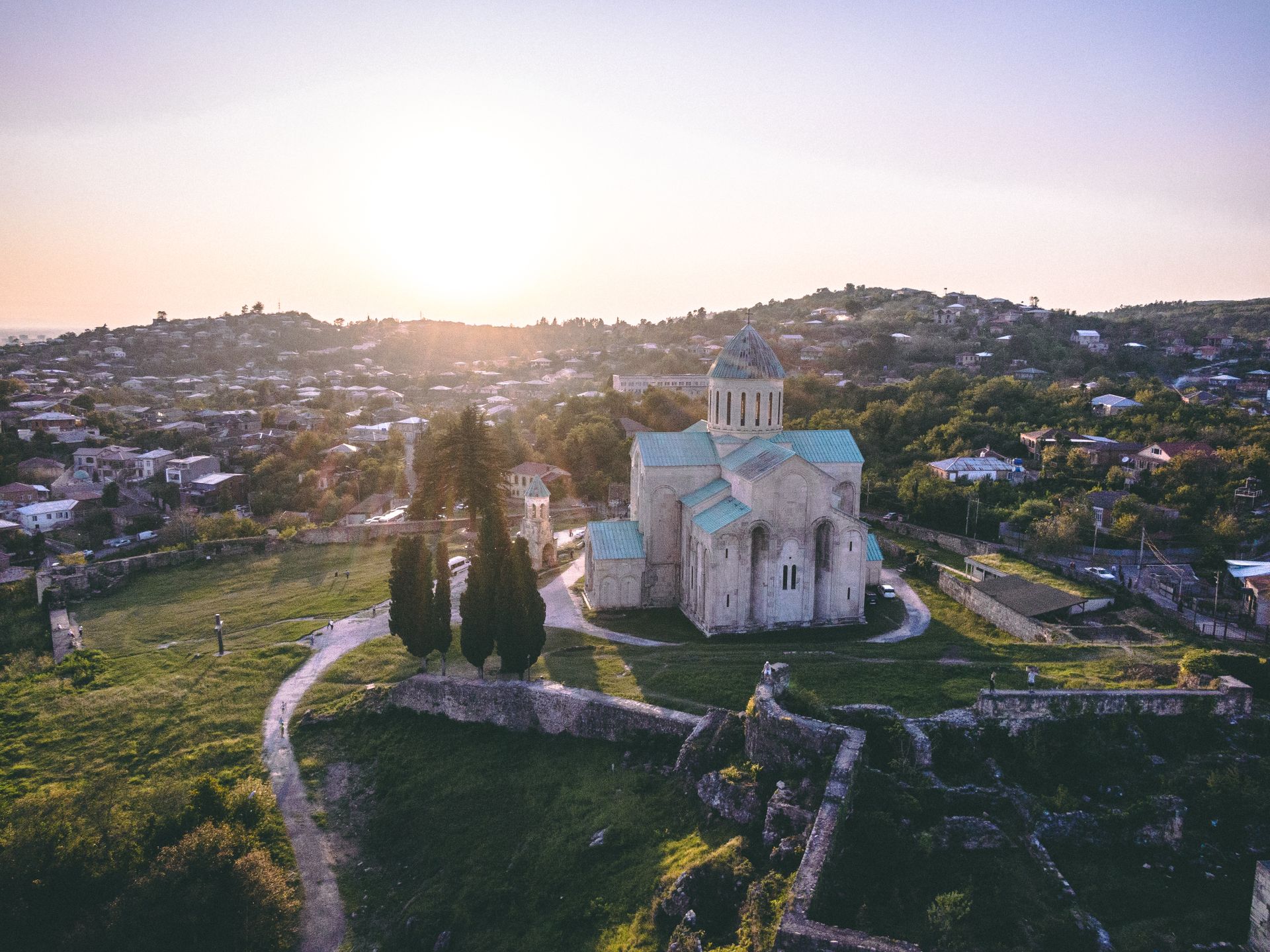
Bagrati Cathedral (UNESCO)
Dominating the city centre from a hilltop, Bagrati Cathedral was built in the 11th century and became the symbol of Georgia's unified kingdom. Largely destroyed by the Ottomans in 1692, the structure underwent a highly controversial restoration in 2012 and was rebuilt. UNESCO initiated proceedings to remove the cathedral from its World Heritage List over management concerns, though the building remains a compelling sight. The views from Cathedral Hill across Kutaisi and the surrounding green countryside are excellent regardless of one's view on the restoration.
Prometheus Cave
Located approximately 22 km from Kutaisi, Prometheus Cave is Georgia's largest and most visited cave system. The explored section extends more than 1,400 metres and contains over 1,400 stalactites and stalagmites in dramatic formations. The cave features colourfully lit chambers, underground lakes, and channels navigable by boat tour. Visits are guided only and take approximately 1–1.5 hours; bring an extra layer as the cave maintains a constant temperature of 14°C throughout the year.
Okatse Canyon
Around 40 km southwest of Kutaisi, Okatse Canyon is a spectacular natural wonder carved through deep limestone cliffs draped in dense forest. The most thrilling section is explored via a suspended metal walkway bolted to the canyon wall, at certain points hanging dozens of metres above the river far below. The nearby Kinchkha Waterfall is one of the tallest in Georgia and can be combined with the canyon on the same half-day excursion.
Martvili Cave
Easily combined with Okatse on the same day, Martvili Cave offers a different experience to Prometheus by featuring a boat tour along an underground river. It sees considerably fewer visitors and retains a more intimate, unspoiled atmosphere. The turquoise underground lake and vivid rock formations inside are genuinely remarkable.
Sataplia Nature Reserve
Just outside Kutaisi, Sataplia Nature Reserve is one of a handful of places in the world where dinosaur footprints are preserved in situ. Dating back approximately 120 million years, the tracks are the reserve's centrepiece, but the park also contains a small cave system, the ancient Colchic forest, and a glass-floored viewing platform overlooking the city. It is particularly recommended for families with children and can easily be combined with Prometheus and Gelati into a full-day programme.
Kutaisi State Historical Museum
Located in the city centre, the State Historical Museum showcases the region's rich archaeological heritage: gold artefacts and jewellery from the Kingdom of Colchis, medieval Georgian manuscripts, and finds connected to the legend of the Golden Fleece discovered in the Alazani Valley. The collection provides essential context for appreciating the scale of what Kutaisi once was.
Historic Bazaar and City Centre
Kutaisi's historic bazaar is considerably calmer and more local in character than Tbilisi's crowded Narikala market. Fresh spices, Georgian cheese varieties, home-made wine and craft goods are all available here. Kolkhida Square in the city centre is the natural gathering point for locals in the evening hours and a pleasant place to experience everyday Georgian city life.
Gelati Monastery
12th-century UNESCO World Heritage site founded by King David the Builder. Extraordinary Byzantine mosaics and frescoes; Georgia's most important religious and cultural complex.
Bagrati Cathedral
11th-century UNESCO heritage structure dominating Kutaisi's skyline. Symbol of Georgia's united kingdom; panoramic views of the city and surrounding green hills.
Prometheus Cave
Georgia's largest cave system with 1,400+ stalactites, underground lakes and boat tour channels. Constant 14°C — bring a jacket. Guided tours last 1–1.5 hours.
Okatse Canyon
Suspended metal walkway above deep limestone canyon with stunning forest scenery. Some sections hang dozens of metres above the river below. Kinchkha Waterfall nearby.
Martvili Cave
Underground river boat tour in a far less crowded cave than Prometheus. Turquoise underground lake and vivid rock formations; easily combined with Okatse Canyon.
Sataplia Nature Reserve
120-million-year-old dinosaur footprints, a small cave system and a glass-floored viewing platform overlooking Kutaisi. Ideal for families; just 6 km from the city centre.
Getting There
Train from Tbilisi takes approximately 5 hours (17–20 GEL). Marshrutka (shared minibus) takes 3 hours (10–12 GEL). Kutaisi International Airport offers direct flights from numerous European cities including Vilnius, Warsaw and Budapest.
Day Trip from Batumi
Kutaisi is only 110 km from Batumi, making it a perfect day trip for those combining Black Sea beach time with historical sightseeing. Marshrutka connection takes approximately 2 hours each way.
Budget-Friendly City
Kutaisi is noticeably cheaper than both Tbilisi and Batumi. A comfortable daily budget of USD 30–50 is achievable. Guesthouses from USD 15–25/night; mid-range hotels USD 40–70/night.